The Magic Pickle secretly fights crime from his HQ under Jo Jo’s bed (her house is built on top of the lab that created him). He uses his crime computer and super powers to fight the wicked fruits and veggies of The Brotherhood of Evil Produce. He’s detected some sinister citrus at the Farmer’s Market. One of Jo Jo’s classmates, has brought a strange machine to school, along with a wagonload of fruit (she was soured by the free lemonade). It’s the start of The Raizin’s plan to create a planet of grapes!
Here is Amazon’s review of the book:
Scott Morse introduces one of the most hilarious superheroes ever: a flying, green Magic Pickle!
Magic Pickle is a secret weapon developed in a secret military lab—under little JoJo Wigwam’s bedroom floor. The fearless dill superhero meets his match in this feisty eight-year-old. Together they go after Ray Sin, a renegade raisin from the Brotherhood of Evil Produce. Ray Sin has a dastardly plan: to turn every human being on the planet into big, juicy, mindless grapes, so he can rule the world!
Ray Sin has tricked the new kid in town into becoming his hapless helper and is using the class science fair as his cover. He’s got everybody in the school—kids, the principal, even the janitor—eating big gobs of grapes . . . and turning into roly-poly purple fruits!
Magic Pickle and JoJo act fast: with the skillful use of a juicemaker, they save the day and capture Ray Sin, whose criminal career is now all dried up.
I have to admit that the idea of sentient fruits and vegetables is hard for me to swallow. I can believe in self-aware PLANTS, mind you, but fruits and vegetables have been removed from the plant (or fallen off if left alone), so they seem like amputated limbs more than characters on their own.
The California Raisins, however, they were TOTALLY believable.
Here is Diane Sawyer’s interview with Rosie O’Donnell.
Diane mentioned that Rosie O’Donnell had been in the business for thirty years now and she wanted to know what Rosie would say to that girl from thirty years ago. She said:
I’ve also seen it attributed to Ralph Waldo Emerson, but I cannot find the quote in Bartletts or any other of my quotation books under either name. It was discussed on WikiAnswers here:
This quote is widely attributed to “Frank Outlaw” on the Web, but no actual other corroborating confirmation actually confirms that this is the correct source.
Popular quotation books – including Bartlett’s Familiar Quotations (17th ed., 2002), Roget’s International Thesaurus of Quotations (1970) and The Harper Book of Quotations (3rd ed., 1993) – DO NOT include this quote or any reference to Frank Outlaw.
In July 2003, a woman named “Elizabeth C.,” claimed to have written it in 1998 and sending to members of an e-mail group of people living with lupus.
According to legend, her words were: “these few lines have since taken on a life of their own via the Internet. I was honored when someone asked if they could post it on their work bulletin board. From there it ended up as a desktop theme. It has traveled everywhere.”
Matt Mullenweg, of WordPress fame, talked about this quote and one of his readers commented:
And yet sadly no one has attributed this to its true origin…
The thought manifests as the word;
The word manifests as the deed;
The deed develops into habit;
And habit hardens into character;
So watch the thought and its ways with care,
And let it spring from love
Born out of concern for all beings…
As the shadow follows the body,
As we think, so we become.
From the Dhammapada
Sayings of the Buddha
I have added the Budda quote, but until I’m able to find the other in print somewhere, it will continue to be attributed to Unknown. Who is Frank Outlaw? As far as I can tell, he is an imagined author of a quote that may or may not be his.
Here are a few thoughts to keep your mind about this:
Although it’s interesting to think about what our world would be like if Martin Luther King Jr. hadn’t died on that April morning, we are only left with what he said before he died:
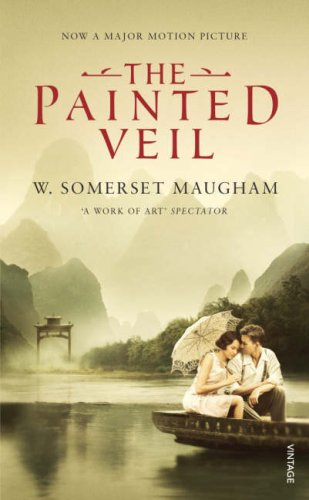
I hadn’t read The Painted Veil before I saw the movie with Ed Norton and Naomi Watts. I wouldn’t normally see a movie like that, but it was based on the book by Maugham, so I bent my rules and watched it. The movie was stunning, so the next time I chose a book to read, I jumped at The Painted Veil.
I wasn’t disappointed. It was the typical W. Somerset Maugham storyline. Kitty Fane married Walter out of desperation, not love. The young and promising doctor was returning to China to work and she jumped at a chance to escape her mother and the life in London. In Hong Kong, however, she met the handsome Charlie Townsend and fell head over heels in love. When Walter discovered her adultery, he gave her the ultimatum: either face divorce, shame and return to her mother’s home or accompany him to Mei-tan-fu, the cholera-infested town suffering from the worst epidemic in years. Given no other choice, Kitty faces Mei-tan-fu and almost certain death.
Although very faithful to the book, there is a primary difference between the movie and the original work. The movie focuses on this quotation as its primary theme:
In the book and in the movie, Kitty says it jokingly, but in the movie, we are shown Walter, enjoying their conversation.
The whole focus of the movie is that one thought, whereas, W. Somerset Maugham had a very different focus for the book. He said as much in the preface he wrote in 1952. He conceived of the story on a trip in Italy. He boarded with a woman and her daughter:
Her daughter gave me an Italian lesson every day. She seemed to me then of mature age, but I do not suppose that she was more than twenty-six. She had had trouble. Her betrothed, an officer, had been killed in Abyssinia and she was consecrated to virginity. It was an understood thing that on her mother’s death Ersilia would enter religion.
The Painted Veil is as much about the French nuns and their vision of peace as it is about Kitty Fane. Here are the quotations that deal with those concepts:
The only philosophical mention that the nuns get in the movie is a quick retort from Walter:
They also go to young mothers in their homes. They ask them to give their babies to the convent. They offer them money to support their families and persuade them to do it. They’re not just here to run an orphanage, your nuns. They’re turning those children into little Catholics. None of us are in China without a reason.
Considering his leanings toward religion, this quote sounds as if W. Somerset Maugham himself wrote it, but he didn’t. The Painted Veil was written as a much more respectful and loving painting of religion and Catholicism in general.
What the movie cut from the religious aspect of the book, they added to regarding the relationship between Walter and the Colonel Ye. Showing Walter’s good works and influence on the town and the abating epidemic is far more powerful than just hearing second hand about his good works.
The final difference between the book and movie involves a spoiler, so if you wish to encounter the story without a surprise, read no further. Read the rest of this entry »

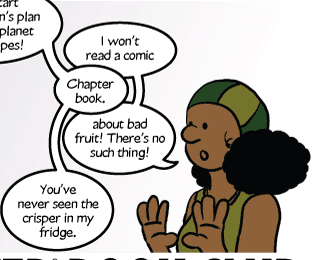 Unshelved has recommended Magic Pickle and the Planet of the Grapes by Scott Morse.
 Here is Amazon’s review of the book:
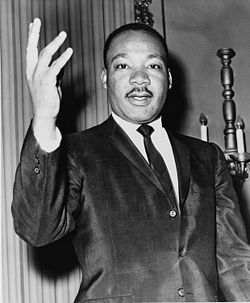 Here is an interesting story from Associated Press conjecturing about Martin Luther King Jr. and what he would say today if he had lived.